
Permission to Play is a positive intervention that must be practiced, repeatedly. Below are a few activities to guide you in exploring play experiences that feel authentic to you. When engaging in a positive intervention, it helps to track your wellbeing as a measure of success. Before you dive in, take your PERMA+ Snapshot and see what your score is today. Next, try each of the activities below over the coming weeks and then retake your PERMA+ Snapshot to see how the positive intervention of Permission to Play impacted your wellbeing.
Try the positive intervention as researchers intended …
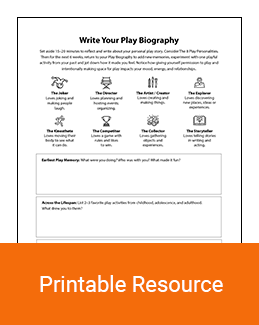
Positive Intervention: Write Your Play Biography
A Play Biography is a reflection exercise designed to help you rediscover the joy of play by looking back at your own history of playful experiences. Researchers have found that reflecting on past play helps adults reconnect with what brings them energy, builds self-awareness about their “play personality” and increases both positive emotions and overall wellbeing. Set aside 15-20 minutes to reflect and write about your personal play story. Then for the next 6 weeks, return to your Play Biography each week. Add new memories, experiment with one playful activity from your past and jot down how it made you feel. Notice how giving yourself permission to play impacts your mood, energy and relationships.
Once you have completed your first 6 weeks of your Play Biography, don’t stop there. Explore these additional practices to add more nature into your life.
- Deep Dive Play
Autistic joy often comes through “deep dives” into special interests — what researchers call, “monotropism.” Instead of rushing or limiting this, give yourself (or your child) permission to fully immerse. Block out 30-60 minutes to engage with a special interest without interruption — whether it’s lining up cars, drawing, coding, researching trains or collecting facts about favorite animals. Notice the flow state that emerges and how refreshed or grounded you feel afterward.
- Play Sparks
Play often emerges from small “sparks” of curiosity or silliness. To practice noticing play sparks, keep a small notebook or use your phone to jot down playful urges throughout the day. Did you feel like making a pun? Want to skip instead of walk? Catch yourself doodling? These moments are invitations to play. Over the week, try saying “yes” to more of them and reflect on how your days feel different when you let play in.
- Shared Interest Exchange
Play doesn’t always mean pretending — sometimes it’s about connection through passions. Choose one special interest and create a playful exchange with someone else. You might share a favorite fact, build something together or invite someone into your world by showing them your collection or favorite video. Then ask them to share theirs in return. This practice builds connection while validating your play style.
- Recess for Adults
Children get recess built into their day — why shouldn’t adults? For the next week, carve out a 15–20 minute “recess” break in your schedule. Step away from work, head outside if possible and do something playful: toss a ball, doodle, dance or play a quick board or card game. Treat it as a non-negotiable appointment with joy. Afterward, jot down how you feel compared to before your break.
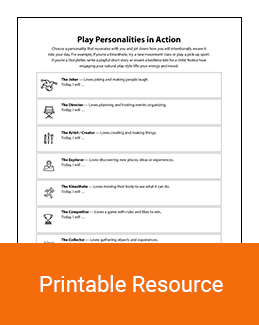
 Play Personalities in Action
Psychiatrist Stuart Brown’s research identifies eight “play personalities,” from the Explorer to the Joker. This week, choose one personality that resonates with you and intentionally weave it into your day. For example, if you’re a Kinesthete, try a new movement class or play a pick-up sport. If you’re a Storyteller, write a playful short story or invent a bedtime tale for a child. Notice how engaging your natural play style lifts your energy and mood.