

“Play is the highest form of research.”
— Albert Einstein —
For Your Family
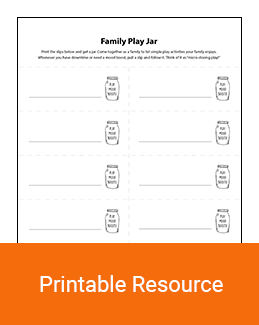 Family Play Jar
- Create a jar filled with slips of paper listing simple play activities your family enjoys — quick dance breaks, a card game, building with blocks or Legos, telling knock-knock jokes or trying a silly challenge together. Whenever you have downtime or need a mood boost, pull a slip and follow it. Think of it as “micro-dosing play.” Over time, your Play Jar becomes a family tradition that keeps laughter and connection flowing.
Special Interest Showcase
- Give each family member a turn to share something from their personal play or special interest — a drawing, a favorite video, a small collection or a quick demonstration. Rotate who gets to “host” the showcase, and let the rest of the family join in by asking questions or trying it out themselves. This activity honors diverse play styles and helps everyone feel seen and valued.
For Your School
Recess Revival
- Play isn’t just for young children. Build playful breaks into the school day for students of all ages. Try a 10-minute recess period with jump ropes, chalk, or ball games, set up a joke-of-the-day board or organize quick group challenges like paper airplane contests. Research shows that playful breaks restore attention, reduce stress and increase cooperation, making the whole school day more productive and enjoyable.
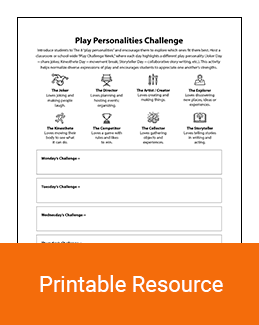 Play Personalities Challenge
- Introduce students to Stuart Brown’s eight “play personalities” and encourage them to explore which ones fit them best. Then, host a classroom or school-wide “Play Challenge Week,” where each day highlights a different play personality (Joker Day = share jokes; Kinesthete Day = movement break; Storyteller Day = collaborative story writing, etc.). This activity helps normalize diverse expressions of play and encourages students to appreciate one another’s strengths.
For Your Community
Community Play Day
- Host a neighborhood or community-wide Play Day with stations for different types of play — board games, building activities, dance, sports and creative arts. Be sure to include sensory-friendly spaces and interest-driven activities for neurodiverse participants. Community play events foster belonging, strengthen relationships and remind people that joy is a shared experience.
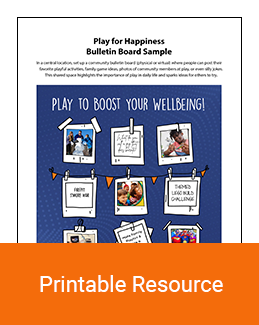 Play for Happiness Bulletin Board
- Set up a community bulletin board (physical or virtual) where people can post their favorite playful activities, family game ideas, photos of community members at play or even silly jokes. This shared space highlights the importance of play in daily life and sparks ideas for others to try.